
It looked official. That’s what made it dangerous.
A message shows up on your phone:
“Final notice: Your tax refund is on hold. Click here to verify your details.”
It sounds urgent. Important. Real.
And that’s exactly why people click.
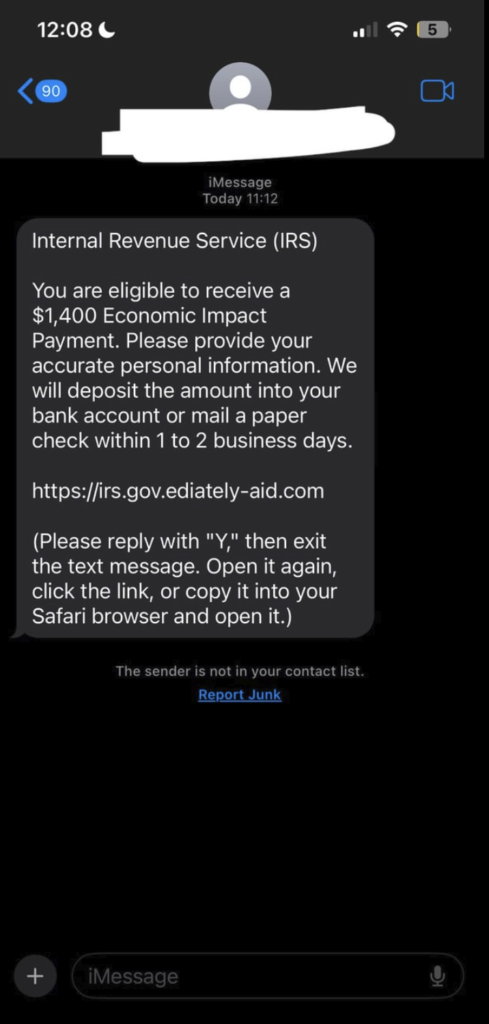
Example of a common IRS scam text message.
The IRS has repeatedly warned that they do not send unexpected text messages asking for personal information. https://www.irs.gov/help/report-fraud/report-fake-irs-treasury-or-tax-related-emails-and-messages
Why These Messages Work So Well
Scammers rely on two things:
- Urgency (“Final notice”, “Act now”)
- Authority (IRS, bank, delivery services)
When those combine, your brain goes into react mode instead of think mode.
3 Red Flags in Tax Scam Messages
1. The IRS does NOT text you
The IRS does not send unexpected texts asking for personal information.
2. The link looks slightly off
Even if it says “IRS,” the actual link often:
- Has extra words
- Uses an authority domain but not at the end (where the domain is legitimate)
- Is shortened or hidden
3. It creates pressure
Scammers want you to act fast before you verify.
What Happens If You Click
This is where the real damage happens:
- You’re taken to a fake site that looks legitimate
- You enter your personal info
- Your identity or money is at risk
And most people don’t realize until it’s too late.
What You Should Do Instead
Before clicking anything:
- Pause
- Copy the link
- Check it using a tool like SecureScamCheck
Try This Instead (Takes 10 Seconds)
Instead of guessing…
👉 Paste the link into SecureScamCheck
👉 Get a risk score
👉 See why it’s safe or not
Final Thought
If a message makes you feel rushed, it’s worth checking.
Because the cost of being wrong is much higher than the cost of taking 10 seconds to verify.