
They seemed real. That’s how it starts.
A message. A connection. A conversation that feels genuine.
Then slowly…
- They gain your trust
- They share a story
- And eventually… they ask for help
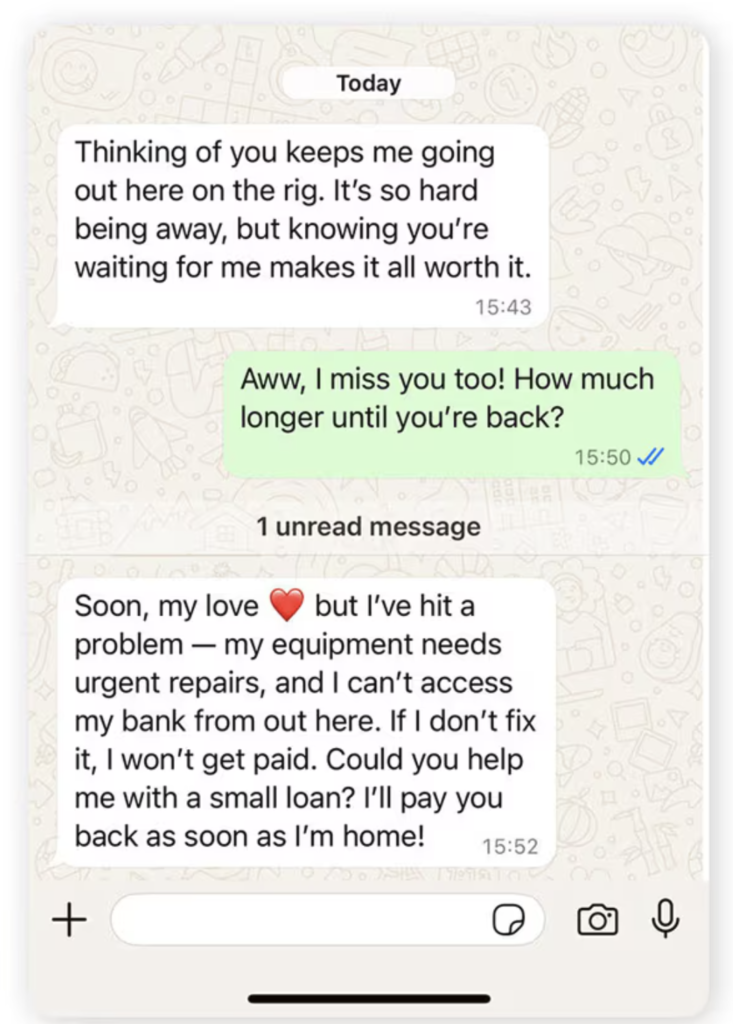
Example message from an online relationship.
The Problem: Fake People Are Harder to Spot Than Ever
Today’s scams use:
- AI-generated profile photos which get more realistic than before
- Stolen images from real people
- Deepfake videos and voice
So it’s not always obvious anymore.
Common Signs of a Fake Profile
1. The profile looks “too perfect”
Professional photos. Perfect lighting. Almost like a stock image.
2. Their story creates emotional pull
- Widowed
- Working overseas
- In a difficult situation
- Needing a “savior” because of hardship
3. They avoid real-life verification
- Won’t video call
- Excuses for not meeting
- Always “busy” or “traveling”
The Turning Point
At some point, the conversation shifts:
- “I need help with something urgent…”
- “Can you send money…”
- “I can’t access my account…”
This is where many people get caught.
How to Check If Someone Is Real
Before trusting someone:
- Reverse search their image
- Look for inconsistencies
- Or upload their photo to a verification tool
Use This Before You Trust Them
With SecureScamCheck, you can:
- Upload a profile image
- Analyze for scam patterns
- Get a risk-based assessment
Final Thought
It’s not about being skeptical of everyone.
It’s about protecting yourself before you trust someone you’ve never met.
👉 Check a profile before you trust it