
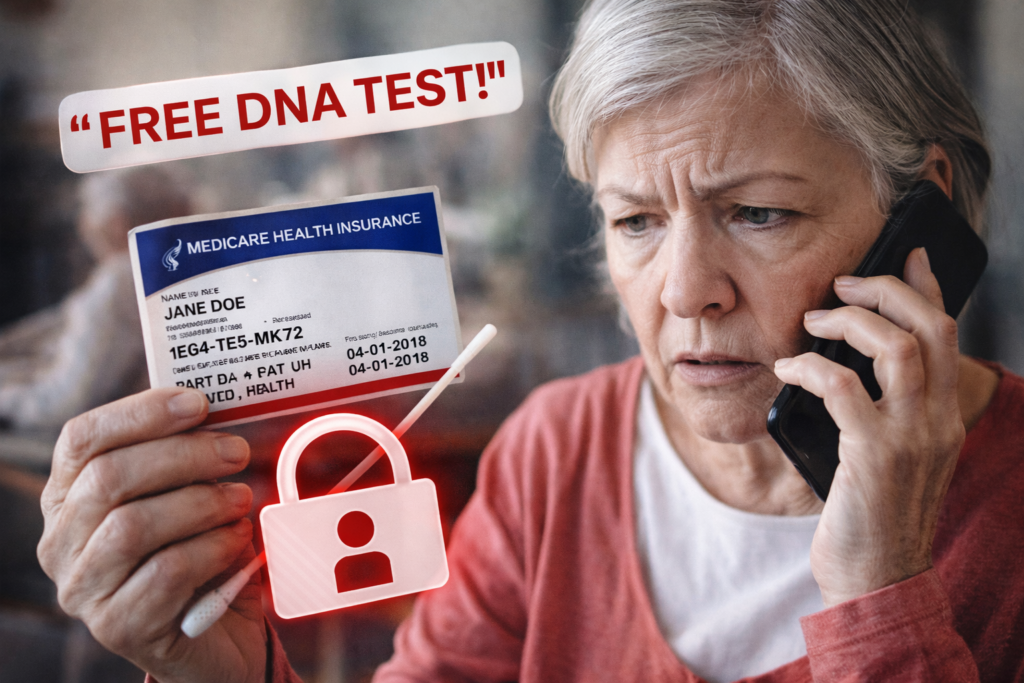
That “Free” DNA Test Could Cost You Your Identity
Medicare DNA test scams are targeting seniors by offering “free” genetic testing—but what they really want is your personal information.
Your Medicare number is worth thousands on the dark web. Once it’s stolen, it can be used for fraud, fake medical claims, and identity theft.
In April 2026, senior centers across the country are seeing a surge in this scam. It starts with a simple offer:
“Free DNA test — covered by Medicare.”
Sounds helpful. It’s not.
What Is the Medicare DNA Test Scam?
A Medicare DNA test scam is when criminals offer “free” genetic testing to collect your personal and medical information for fraud.
They often pose as healthcare providers or government representatives to make the offer seem legitimate.
What’s Really Happening
Scammers contact Medicare beneficiaries offering free genetic testing. They claim it’s covered by Medicare and say they just need a few details to process it.
Here’s what they ask for:
- Your Medicare number
- Your date of birth
- Sometimes your Social Security number
Here’s what they do with it:
- Medical identity theft — receive care under your name
- Billing fraud — charge Medicare for fake services
- Sell your data — health information is highly valuable
And here’s the worst part:
It can take years to fix.
You could go to the doctor and be told you have conditions you’ve never had—because someone else used your identity.
The Warning Signs
Watch for these red flags of a Medicare DNA test scam:
- Unsolicited calls offering “free” medical services
- Requests for your Medicare number
- Requests for your Social Security number
- Claims they represent Medicare or a government agency you didn’t contact
- Offers that seem too good to be true
What the Government Is Saying
The Department of Health and Human Services Office of Inspector General has warned about this scam for years—and it’s surged again in 2026.
Real Medicare representatives will never call you unexpectedly asking for personal information.
And Medicare does not need you to “verify” your identity for benefits you already receive.
How to Stay Safe
- Hang up on unexpected calls about health benefits
- Never give your Medicare number to unsolicited callers
- Only request DNA testing through your doctor
- Report suspicious calls to the OIG: 1-800-HHS-TIPS
Source Links:
Not Sure If a Call or Offer Is a Scam?
Before you give out your information, check it.
Paste suspicious messages or upload screenshots into SecureScamCheck and get a clear answer in seconds—before it costs you your identity or benefits.